
Life Situation → Vehicle Requirements → Vehicle Type Guidance
Business Use
What vehicle type fits your business needs?
Business-use vehicles need to match work tasks, carrying needs, operating costs and personal use without becoming the wrong compromise.
01
Situation
02
Vehicle Requirements
03
Vehicle Type Guidance
1. Situation
Start with the life context, not a vehicle model.
The vehicle may need to work as a business tool, daily transport and sometimes a family vehicle.
2. Vehicle Requirements
What the vehicle needs to do.
These are the practical requirements that should be visible before comparing specific vehicles.
Load, access and equipment requirements
Fuel, servicing, tyres, insurance and downtime
Professional image, passenger needs and daily comfort
Parking and manoeuvrability at work sites or client locations
3. Vehicle Type Guidance
Which vehicle types are worth comparing first.
This is guidance, not a final recommendation. The assessment checks how these options fit your full situation.
Compare utes, vans, wagons, SUVs and efficient small vehicles based on the actual work role.
Avoid assuming a ute is required unless load, towing or worksite access justify it.
Check whether one vehicle can serve business and personal needs without becoming compromised.
4. Ownership Consequences
What could happen if this decision is wrong.
The goal is not to create fear. It is to make the ownership trade-offs visible before money is committed.
A vehicle chosen for image can miss the real work requirement.
A work-focused vehicle can become frustrating if it also needs to suit family or city use.
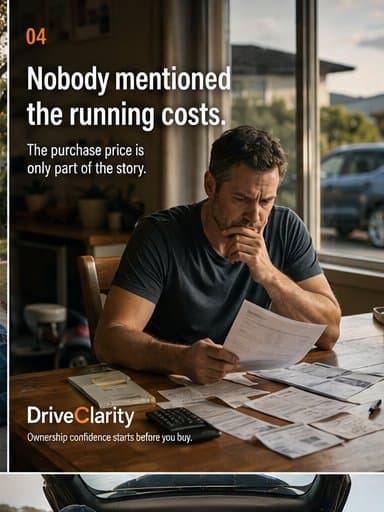
Running costs, tyres, insurance and downtime can affect the true ownership decision.
5. What to consider before buying
Checks to complete before shortlisting.
01
Decision check
Separate work requirements from personal preference.
02
Decision check
Check load, access, parking, tax conversations and running costs with professional advice where needed.
03
Decision check
Consider whether one vehicle can realistically handle work and family roles.
6. Assessment CTA
Check how this situation fits your actual ownership needs.
DriveClarity uses your situation, requirements and ownership priorities to help identify the direction that appears most suitable before you buy.
Continue your decision journey
Move from situation to a clearer vehicle direction.
These links continue the decision rather than sending you into unrelated reading.