
Life Situation → Vehicle Requirements → Vehicle Type Guidance
Caravan & Towing
What vehicle type fits caravan ownership and towing?
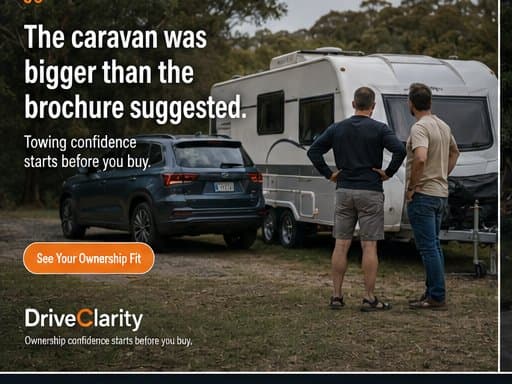
Caravan and towing decisions need more than a brochure tow rating. Payload, stability, trip distance and ownership costs matter.
01
Situation
02
Vehicle Requirements
03
Vehicle Type Guidance
1. Situation
Start with the life context, not a vehicle model.
The vehicle needs to support towing, touring, payload, passengers and daily use without creating a second ownership problem.
2. Vehicle Requirements
What the vehicle needs to do.
These are the practical requirements that should be visible before comparing specific vehicles.
Towing capacity and payload together
Touring range and fuel use under load
Stability, comfort and braking confidence
Daily usability when not towing
3. Vehicle Type Guidance
Which vehicle types are worth comparing first.
This is guidance, not a final recommendation. The assessment checks how these options fit your full situation.
Compare large SUVs, utes and touring vehicles against the actual caravan and trip profile.
Do not treat towing capacity as the whole answer.
Keep everyday driving, parking and running costs in the decision.
4. Ownership Consequences
What could happen if this decision is wrong.
The goal is not to create fear. It is to make the ownership trade-offs visible before money is committed.
Choosing on tow rating alone can hide payload and stability limits.
Buying a towing vehicle that is too large can make daily ownership more expensive and less convenient.
Underestimating caravan weight can force another vehicle decision later.
5. What to consider before buying
Checks to complete before shortlisting.
01
Decision check
Confirm towing weight, payload, passengers, accessories and luggage together.
02
Decision check
Check whether the vehicle remains comfortable and controlled when loaded.
03
Decision check
Consider touring range, fuel use, servicing and tyre costs.
6. Assessment CTA
Check how this situation fits your actual ownership needs.
DriveClarity uses your situation, requirements and ownership priorities to help identify the direction that appears most suitable before you buy.
Continue your decision journey
Move from situation to a clearer vehicle direction.
These links continue the decision rather than sending you into unrelated reading.