
Life Situation → Vehicle Requirements → Vehicle Type Guidance
Not Sure Yet
Not sure where to start?
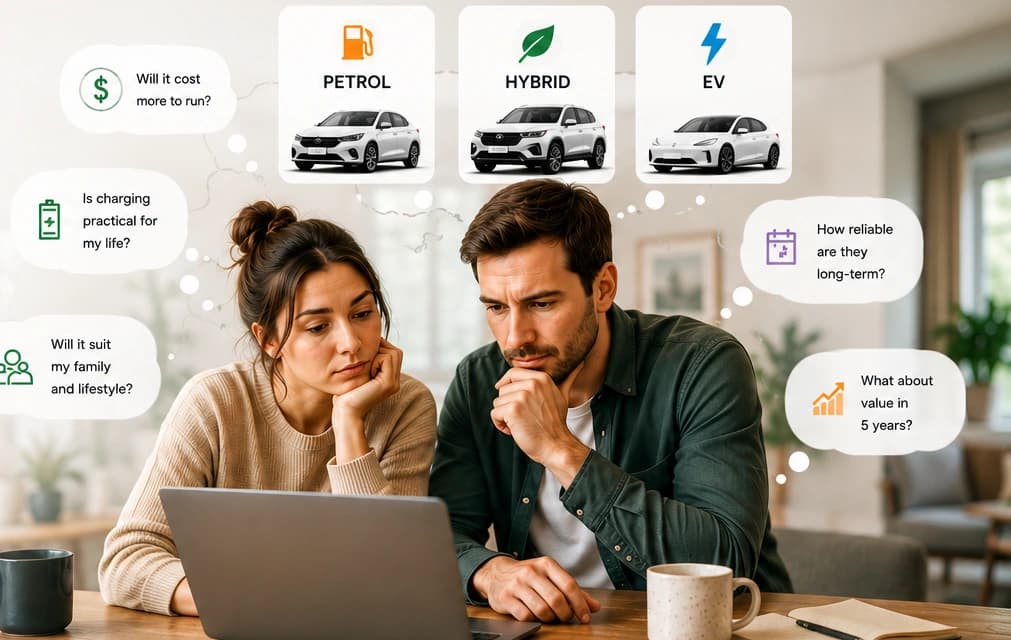
If you are not sure where to start, the first decision is to identify the situation, requirements and ownership risks before comparing vehicles.
01
Situation
02
Vehicle Requirements
03
Vehicle Type Guidance
1. Situation
Start with the life context, not a vehicle model.
The buyer has not yet named the real vehicle decision. The goal is to identify requirements before jumping to technology, body style or model comparisons.
2. Vehicle Requirements
What the vehicle needs to do.
These are the practical requirements that should be visible before comparing specific vehicles.
Passenger and cargo needs
Driving pattern and trip distance
Parking, charging and home setup
Budget pressure and future needs
3. Vehicle Type Guidance
Which vehicle types are worth comparing first.
This is guidance, not a final recommendation. The assessment checks how these options fit your full situation.
Do not choose a vehicle type until the ownership job is clear.
Use the assessment to compare requirements before comparing models.
Let the decision move from situation to requirements to vehicle type and technology.
4. Ownership Consequences
What could happen if this decision is wrong.
The goal is not to create fear. It is to make the ownership trade-offs visible before money is committed.
Starting with models can hide the real ownership need.
Choosing technology first can distract from space, cost, parking or lifestyle fit.
Shortlisting too early can make the decision feel clearer than it really is.
5. What to consider before buying
Checks to complete before shortlisting.
01
Decision check
Clarify who and what the vehicle needs to carry.
02
Decision check
Identify the driving pattern before choosing technology or body style.
03
Decision check
Use the assessment to turn uncertainty into a clearer ownership direction.
6. Assessment CTA
Check how this situation fits your actual ownership needs.
DriveClarity uses your situation, requirements and ownership priorities to help identify the direction that appears most suitable before you buy.
Continue your decision journey
Move from situation to a clearer vehicle direction.
These links continue the decision rather than sending you into unrelated reading.